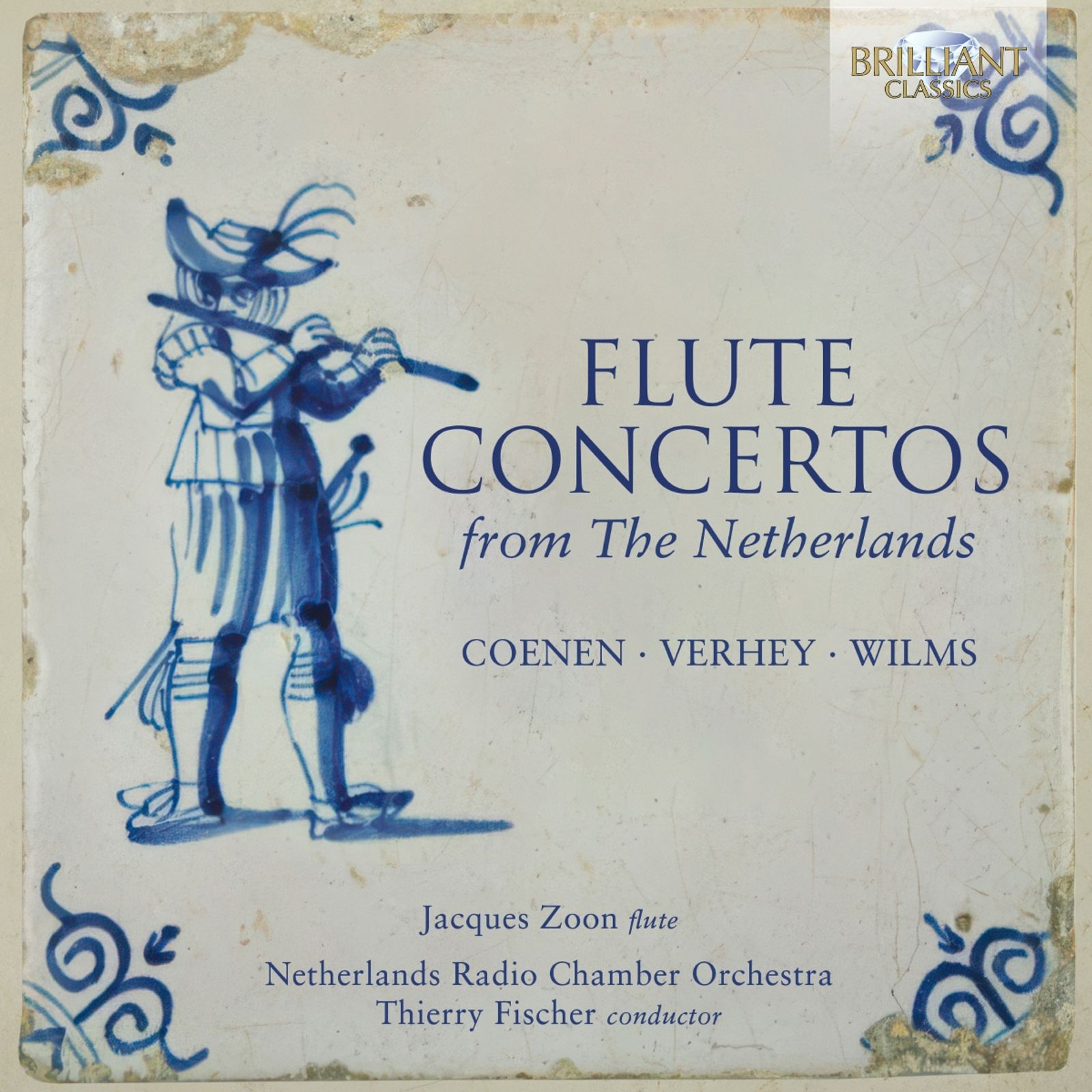
Flute Concertos from the Netherlands: Coenen, Wilms, Verhey
14,00 €
Formát:
CD
Dostupnosť:
na sklade / in stock
Katalógové číslo:
97004
EAN kód:
5063758970044
Autori:
Johann Wilhelm Wilms, Johannes Meinardus Coenen, Theo Verhey
Interpreti:
Jacques Zoon, Netherlands Radio Chamber Orchestra , Thierry Fischer
Vydavateľ:
BRILLIANT CLASSICS
Zoznam skladieb
Dátum vydania: April 20261
Theo Verhey: Flute Concerto No. 1 in D Minor, Op. 43: I. Allegro non troppo
2
Theo Verhey: Flute Concerto No. 1 in D Minor, Op. 43: II. Andantino
3
Theo Verhey: Flute Concerto No. 1 in D Minor, Op. 43: III. Allegro alla zingarese
4
Johann Wilhelm Wilms: Concertino in G Minor: I. Allegro
5
Johann Wilhelm Wilms: Concertino in G Minor: II. Larghetto
6
Johann Wilhelm Wilms: Concertino in G Minor: III. Rondo. Allegro
7
Johannes Meinardus Coenen: Nocturne (Andante)
8
Theo Verhey: Concerto No. 2 in A Minor, Op. 57: I. Allegro
9
Theo Verhey: Concerto No. 2 in A Minor, Op. 57: II. Andantino
10
Theo Verhey: Concerto No. 2 in A Minor, Op. 57: III. Finale. Vivace
Popis
In the Netherlands in the first half of the 19th century, musical life was still in its infancy. There were no orchestras of international stature, and the dividing line between the inspired amateur and the professional musician was as yet unclear. Two musicians, Johann Wilhelm Wilms (1772-1847) and Johannes Meinardus Coenen (1824-1899), played an important role in the gradual establishment of a professional musical life.
Johann Wilms may be counted among the leading Dutch composers of his generation. His many activities as a composer, musician, organist and organizer have been of invaluable importance to musical life in the Netherlands. Wilms is chiefly remembered as the composer of Wien Neêrlands bloed, which served as the Dutch national anthem before Wilhelmus. Wilms' compositions were published in Germany, Britain and Denmark as well as the Netherlands. In his Concertino in G minor for flute and orchestra (c.1814), Wilms balances on the borderline between the classical and the romantic. At times, the piece displays a Beethovian flair.
Theodoor Verhey (1848-1929) seems to have been of a somewhat less ambitious disposition than Johann Wilms or Johan Coenen. Alter attending the School of Music in his home town Rotterdam and the Royal Conservatoire in The Hague, Verhey studied for four years with Woldemar Bargiel, a stepbrother of Clara Schumann and a member of the Leipzig circle around Schumann, Brahms and Joachim.
Verhey's music moves comfortably within the musical conventions of his day. He preferred to use classical forms and harmonies. The strength of his flute concertos lies in their almost disarming simplicity and in the efficient vehicle they provides for the flute to show off its expressive powers through the registers in a virtuoso display. The gypsy manner ('alla zingara'), which Verhey often uses, naturally invites such a display.
Played with great virtuosity, flair and sensitivity by Jacques Zoon, one of the world’s foremost flute players. He was solo flutist of the Chamber Orchestra of Europe, the Luzern Festival Orchestra (handpicked by Claudio Abbado) and the Boston Symphony Orchestra.