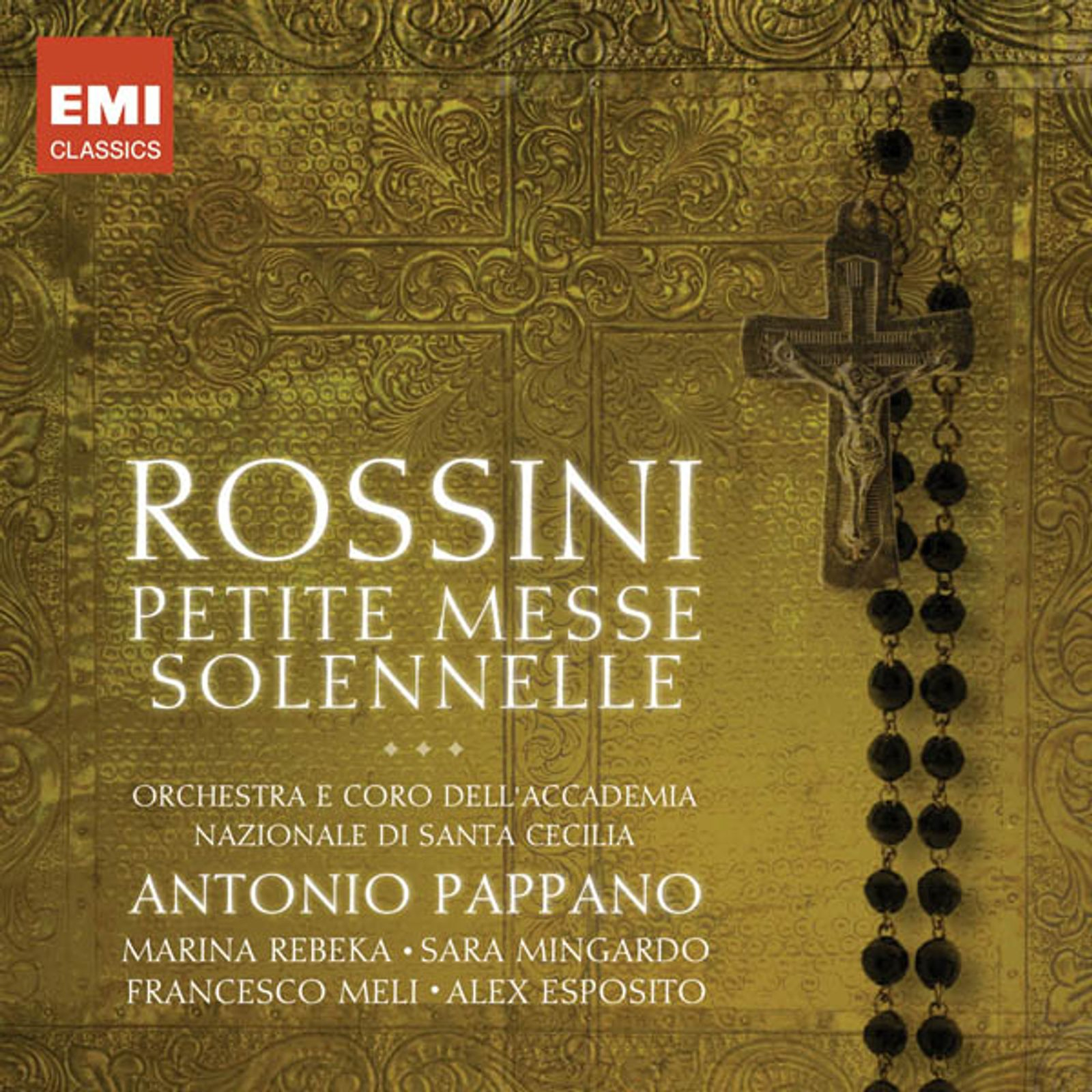
Rossini: Petite messe solennelle (2CD)
21,90 €
Formát:
CD
Dostupnosť:
7-14 dní
Katalógové číslo:
4 16742 2
EAN kód:
5099941674222
Autori:
Gioacchino Rossini
Interpreti:
Alex Esposito, Antonio Pappano, Ciro Visco, Coro dell Accademia Nazionale Di Santa Cecilia, Francesco Meli, Marina Rebeka, Orchestra dell´Accademia Nazionale diSanta Cecilia, Sara Mingardo
Vydavateľ:
WARNER CLASSICS
Zoznam skladieb
CD 11 Kyrie eleison
2 Christe eleison - Kyrie eleison
Gloria
3 Gloria in excelsis Deo
4 Gratias agimus tibi
5 Domine Deus
6 Qui tollis peccata mundi
7 Quoniam tu solus sanctus
8 Cum Sancto Spiritu
Credo
9 Credo in unum Deum
10 Crucifixus
11 Et resurrexit
12 Et vitam ventur saeculi
CD 2
1 Prélude Religieux pendant l'Offertoire; Ritournelle
2 Sanctus / Benedictus
3 O Salutaris
4 Agnus Dei
Popis
Rossini's "little big" late work
The "Petite Messe solennelle" under Antonio Pappano
It is one of the most beautiful, but also one of the most underrated gems of sacred music: Rossini's "Petite Messe solennelle". Spiritual seriousness is combined here with a wealth of melodic richness. In keeping with typical Italian traditions, Rossini set the text of the Catholic liturgy to music with many stylistic borrowings from the tonal language of opera. In the new Roman recording, Rossini's rarely heard late work comes to sonorous life: Antonio Pappano conducts the orchestra and chorus of the Accademia di Santa Cecilia; Marina Rebeka, Sara Mingardo, Francesco Meli and Alex Esposito make up the perfectly harmonized vocal quartet
Incidentally, that this is supposed to be a "little mass" is a typical Rossini understatement. When he lived in Paris, withdrawn from opera, he nevertheless could not give up composing and wrote all kinds of works for various instrumentations, which he jokingly apostrophized as "sins of old age" - and yet there are true masterpieces among them. Rossini wrote the Mass, which lasts almost 90 minutes, in 1863 at the age of 71. The first performance took place with only twelve singers and piano and harmonium accompaniment at the dedication of a count's private chapel. Four years later, the composer completed a version with large orchestral accompaniment. It was not until after Rossini's death that this version was premiered, and it is now considered the opera master's last great work. Like his model Mozart, who left behind an unfinished Requiem, Rossini thus also occupied himself with sacred music at the end of his life.