 | Smile: A Light For Attracting Attention (colored 2LP) |
 | John Coltrane: My Favorite Things (LP) |
 | Smile: Cutouts (LP) |
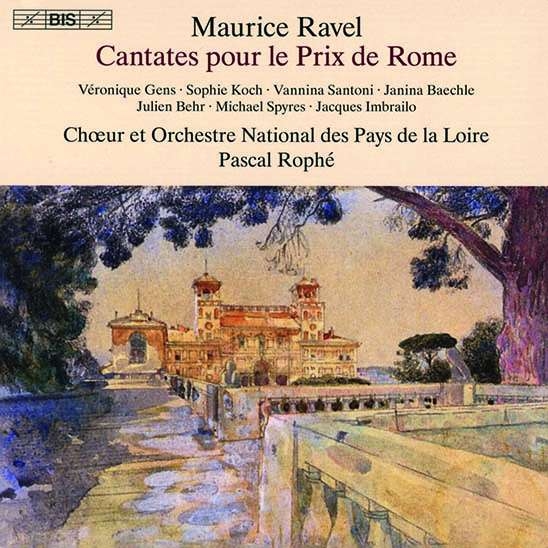
Ravel: Cantates pour le Prix de Rome (2SACD)
29,00 €
Formát:
SACD
Dostupnosť:
7-14 dní
Katalógové číslo:
BIS 2582
EAN kód:
7318599925820
Autori:
Maurice Ravel
Interpreti:
Chœur de lONPL, Clarisse Dalles, Jacques Imbrailo, Janina Baechle, Julien Behr, Mathys Lagier, Michael Spyres , Orchestre National des Pays de la Loire, Pascal Rophé, Sophie Koch, Valérie Fayet, Vannina Santoni, Véronique Gens
Vydavateľ:
BIS
Zoznam skladieb
Disc 1Alyssa (1903) Légende irlandaise
1 Prélude
2 I. Elfes légers, elfes errants
3 II. Ma beauté, ma lumière
4 III. Le barde, porte-glaive !
Alcyone (1902) Scène dramatique
5 Prélude
6 I. À l'horizon, les blanches voiles
7 II. Description symphonique
8 III. Ah ! Dieux puissants !
9 IV. Mon aimé ! Mon aimé !
10 V. Ma fille, mon enfant !
Myrrha (1901) Scène lyrique
11 Prélude
12 I. Me voici seul enfin !
13 II. Ainsi qu'un signal
14 III. Tu ne passeras pas, ô roi
Disc 2
1 L'Aurore (1905)
2 La Nuit (1902)
3 Le Bayadères (1900)
4 Matinée de Provence (1903)
5 Tout est lumière (1901)
Popis
Between 1803 and 1968, the Grand Prix de Rome marked the zenith of composition studies at the Paris Conservatoire. In Maurice Ravels time the competition included an elimination round (a fugue and a choral piece) followed by a cantata in the form of an operatic scena. The entries were judged by a jury which generally favoured expertise and conformity more than originality and Ravels growing reputation as a member of the avant-garde was therefore hardly to his advantage, and may explain why he never won the coveted Premier Grand Prix, and the three-year stay at Romes Villa Medici that went with it.The present two-disc set brings together all the vocal works that Ravel composed for the Prix de Rome five shorter settings for choir and orchestra and three cantatas, each with three characters taking part in a plot which followed a more or less fixed sequence of introduction, recitative and aria, a duet, a trio and a brief conclusion. First published more than half a century after Ravels death, these test pieces for the Prix de Rome have never acquired the popularity of his other early works, such as Pavane pour une infante dfunte, Jeux deau or the String Quartet. They are worth more than their reputation as academic exercises might suggest, however, and deserve to be better known, especially when performed by Orchestre National des Pays de la Loire and Pascal Roph and a team of vocal soloists including Vronique Gens and Michael Spyres.