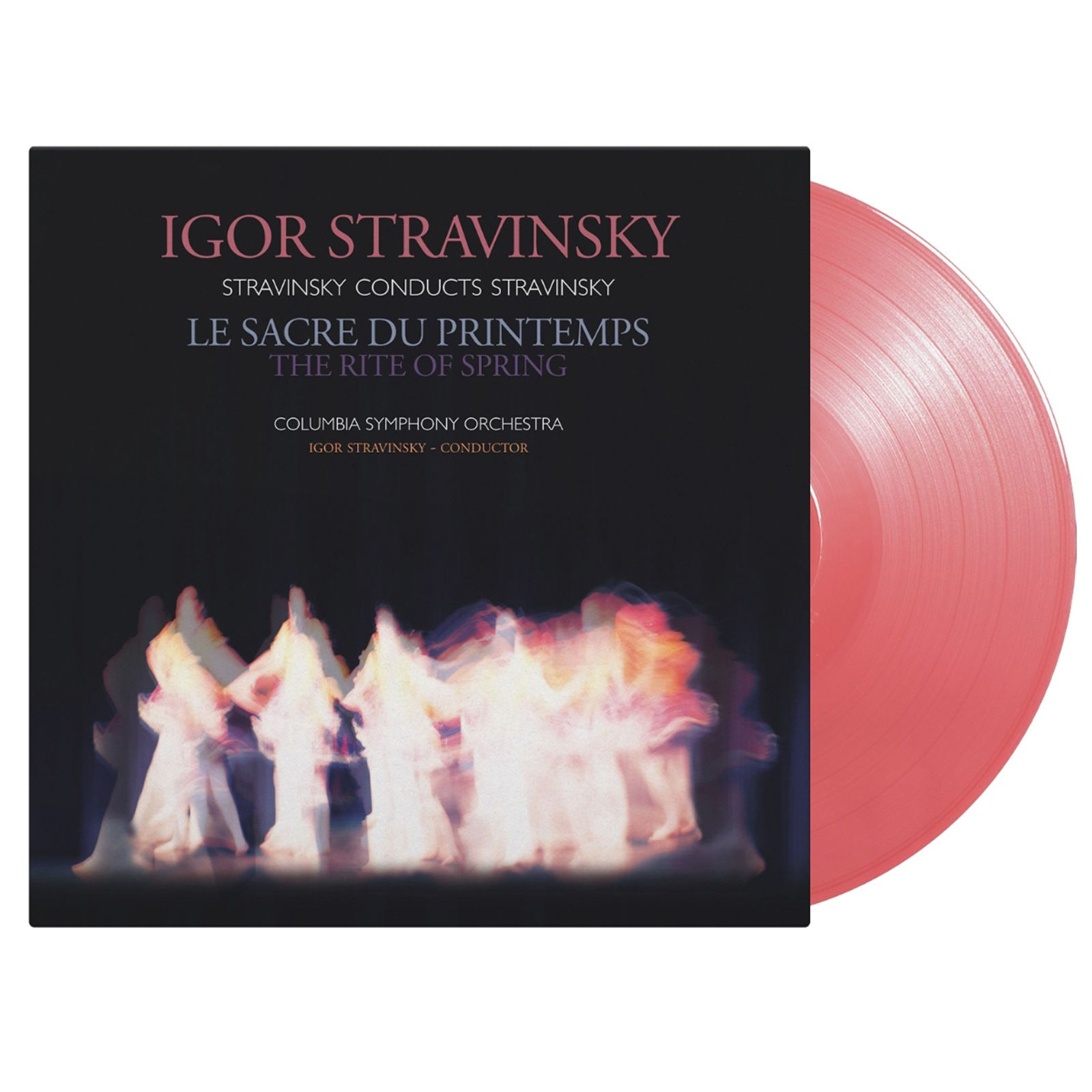
Stravinsky: Le Sacre du printemps (LP colored)
20,00 €
Formát:
LP
Dostupnosť:
na sklade / in stock
Katalógové číslo:
VPCL85028
EAN kód:
8719039007325
Autori:
Igor Stravinsky
Interpreti:
Columbia Symphony Orchestra, Igor Stravinskij, Igor Stravinsky
Vydavateľ:
Vinyl Passion
Zoznam skladieb
Le Sacre du Printemps (180g / Pink Vinyl) on LP 1
Introduction
2
Augures printaniers - danses des adolescentes
3
Jeu du rapt
4
Rondes printanieres
5
Jeu des cites rivales
6
Cortege du sage
7
La sage
8
Dance de la terre
9
Introduction
10
Cercles mysterieux des adolescentes
11
Glorification de l'elue
12
Evocation des ancetres
13
Action rituelle des ancetres
14
Danse sacrale (l'elue)
Popis
The Rite of Spring: Scenes from Pagan Russia in two parts
It was Igor Stravinsky who led classical music into the twentieth century with all his might. Certainly, his contemporaries had paved the way. Romantic melodic works were no longer the dominant force. The new path led via orchestral colors and tone painting. But it was Stravinsky who completely broke with the Romantic past and created modernism. It was almost as if all the old rules had not only been bent, but completely destroyed. In the modern world, anything goes.
Stravinsky made a name for himself at a young age. In his twenties, Serge Diaghilev, the director of the Ballet Russes, became aware of him through his work Fireworks and commissioned Stravinsky to write a ballet based on the Firebird legend. It was a great success and Diaghilev commissioned two more works. The result was Petrouchka and Le Sacre du Printemps.
The story of the premiere of The Rite of Spring is famous: the audience was first treated to Les Sylphides, a ballet based on the music of Chopin. This was followed by Le Sacre du Printemps. The audience, who had undoubtedly been put into a pleasant, dreamy state by the previous work and were expecting something similarly pastoral with the rite named after the most beautiful of all seasons, were in for a harsh shock. A clue can be found in the subtitle of the work: Scenes from Pagan Russia. It began with a bassoon bleating much higher than a bassoon should ever have been allowed to bleat, and then went into 30 minutes of barbarism and pagan sacrificial rituals. The music was shrill, dissonant and difficult. The huge percussion sections pounded out primitive rhythms and Nijinsky's provocative choreography challenged the audience's sensibilities.