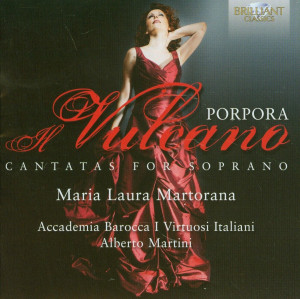
 | Porpora: Cantatas for Soprano |
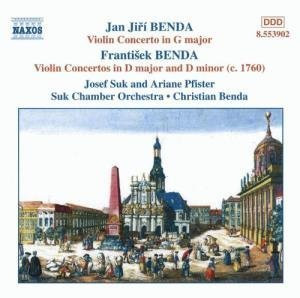 | Benda F. & Benda J.J: Violin Concertos |
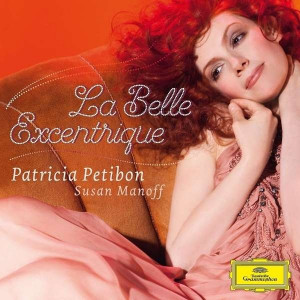 | Patricia Petibon: La Belle Excentrique |
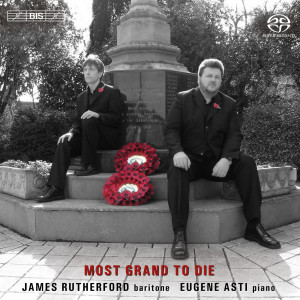 | Most Grand to Die |
 | Mendelssohn-Hensel Fanny: Songs Volume 1 |
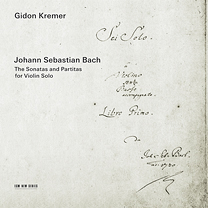
Bach: The Sonatas and Partitas for Violin / Kremer (2CD)
24,00 €
Formát:
CD
Dostupnosť:
7-14 dní
Katalógové číslo:
1926
EAN kód:
028947672913
Autori:
Johann Sebastian Bach
Interpreti:
Gidon Kremer
Vydavateľ:
ECM New Series
Zoznam skladieb
Sonata No. 1 in G minor BWV 1001Adagio
Fuga. Allegro
Siciliana
Presto
Partita No. 1 in B minor BWV 1002
Allemanda
Double
Corrente
Double. Presto
Sarabande
Double
Tempo di Borea
Double
Sonata No. 2 in A minor BWV 1003
Grave
Fuga
Andante
Allegro
Partita No. 2 in D minor BWV 1004
Allemanda
Corrente
Sarabanda
Giga
Ciaccona
Sonata No. 3 in C major BWV 1005
Adagio
Fuga
Largo
Allegro assai
Partita No. 3 in E major BWV 1006
Preludio
Loure
Gavotte en Rondeau
Menuet I
Menuet II – Menuet I da capo
Bourrée
Gigue
Recorded March and September 2002
Popis
Gidon Kremer’s return to J. S. Bach’s Sonatas and Partitas is a major event. Kremer’s first recording of these works was released almost a quarter of a century ago, and in the past few years the only solo piece of Bach’s which he has performed with any regularity has been the “Chaconne”. In 2001/2002 however, he once again took the greatest challenge for any violinist, Bach’s magnificent “Sei Solo”, in Kremer’s words the “Himalayas” of violin music. The recordings were made in locations closely linked with Kremer’s biography: the Sonatas were recorded in the Reformation Church of his birthplace, Riga, while the Partitas were realized in the Pfarrkirche at Lockenhaus, Austria, where he has held his famous annual chamber music festival since 1981.
Those who have followed Gidon Kremer’s artistic development over the past 25 years will hardly expect a ‘historically informed’ interpretation in the conventional sense but will nevertheless note how much his tone and articulation has changed. The new rendering displays Kremer’s very personal sense of spontaneity and a readiness to take risks, yet it is also marked by the structural awareness of an exceptional musician who, in a unique way, does justice both to the polyphonic wealth of the compositions and to their juxtaposition of dance elements and reflective profundity.
For many critics and for listeners around the world, Kremer himself set the standard for performance of this music: he was 33 years old when he first recorded the Sonatas and Partitas for Philips in 1980. Of that recording Albert Roeseler wrote in Great Violinists of our Century that Kremer played “the violin simply better, more excitingly and with more mastery” than anyone, except for Jascha Heifetz and that his interpretation of the Sonatas and Partitas comprised “one of the best of the many existing recordings, even those by Menuhin, Milstein, Szeryng, Szigeti and others, which, at the time of their releases, were given an almost reverential reception.”
Kremer’s intensive and varied career since then has been well-documented. Encounters with musicians such as Luigi Nono, Sofia Gubaidulina, Arvo Pärt or Nikolaus Harnoncourt led Kremer, as he himself says, “to find pathways in music which have also influenced my approach to Bach.” Asked about his motivation to re-enter the cosmos of Bach’s solo works, he characteristically responds with more questions: “Was it the fact that they represent the absolute pinnacle of the literature for solo violin? Or perhaps I was aware that a lot of interpretations I’ve heard do not meet my expectations? That I had the feeling I should once again dedicate myself to Bach; a sort of ‘now or never’ decision?” Kremer believes that it was, above all, “simply the wonder of the ‘Sei’ themselves” which was his primary motivation. He felt a need to “share this experience with other like-minded people.” Kremer regards this current interpretation “as a sort of legacy of the violinist GK”, or at the very least, a “final statement” on Bach. The two essays which Kremer wrote for the extensive CD booklet reveal how closely he identifies with this production.
It is audible that there is more at stake than just the instrumental or musical success in the usual sense: “If you try too hard to be ‘right’ you will never achieve the spirit of a creator, who is only interested in the statement which transcends his own abilities.” Kremer’s utmost interest is in this “statement” and thus in “something mystical beyond the notes.” Lipatti, Gould and Gulda, Casals, Enescu and Menuhin and also Nikolaus Harnoncourt are, in this sense, among Kremer’s influences: musicians who have taught him to see Bach as even “more humane, transparent and yet full of secrets.” Viewed this way, musical interpretation once again becomes a risky endeavour with an unknown ending. Kremer knows this: “Whether I have succeeded in getting across the (almost secret) message as I would like, I can’t judge. I leave that to those who take more pleasure in drawing comparisons than I do”
***
Born in Riga, Latvia, in 1947, Gidon Kremer studied with Pjotr Bondarenko and David Oistrach and won several important competitions, including a first prize in the Moscow Tchaikovsky-competition in 1970. In 1980 he settled in the West and in the following year founded his annual chamber music festival at Lockenhaus, Austria. Kremer has been a champion of a number of important composers including Alfred Schnittke, Arvo Pärt, Sofia Gubaidulina and Luigi Nono. In 1997 he founded the Kremerata Baltica, a chamber orchestra made up of young, exceedingly talented musicians from the Baltic republics. He has been the artistic director of the festival “les muséiques” in Basel since 2002. A prolific recording artist, Gidon Kremer has made more than 100 albums, many of which brought him prestigious international awards and prizes in recognition of his exceptional interpretative powers. These include the “Grand prix du Disque”, “Deutscher Schallplattenpreis”, the “Ernst-von-Siemens Musikpreis”, the “Bundesverdienstkreuz”, the “Premio dell‘ Accademia Musicale Chigiana”, the “Triumph Prize 2000” (Moscow) and in 2001 the “Unesco Prize”.
Kremer’s association with ECM New Series goes back to the launch of this imprint. In 1984 the first ever New Series production was Arvo Pärt’s “Tabula Rasa” which opened with Kremer’s stunning rendition of Fratres performed with Keith Jarrett. A series of discs documenting the first years of Lockenhaus followed. In 1998 Kremer recorded Giya Kancheli’s Lament for ECM and in 2005 this was followed by the release of Kancheli’s “In l’istesso tempo”, which marked the ECM-debut of the Kremerata Baltica. In August 2005 he presented a recording with the Kremerata Baltica of Franz Schubert’s String Quartet in G major in an orchestration by Victor Kissine (ECM New Series 1883).
2 CD set in slipcase includes 44 page German/English/French booklet, with extensive liner notes by Gidon Kremer and Victor Kissine.