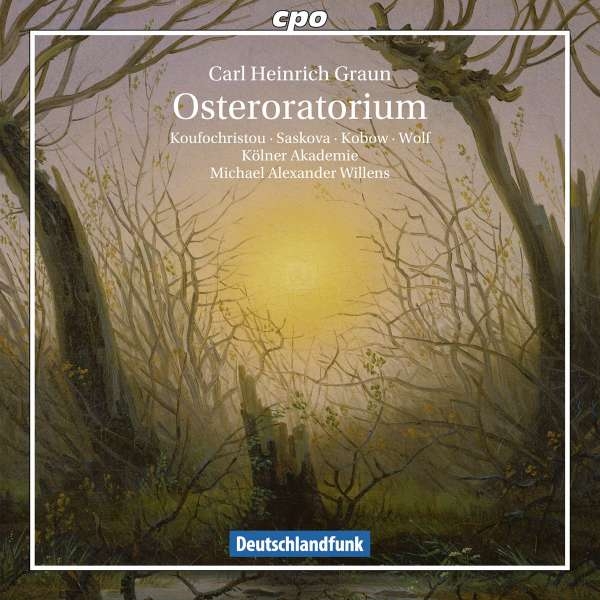
Graun: Easter Oratorio
10,00 €
Formát:
CD
Dostupnosť:
na sklade / in stock
Katalógové číslo:
3251336
EAN kód:
761203779420
Autori:
Johann Gottlieb Graun
Interpreti:
Die Kölner Akademie, Michael Alexander Willens
Vydavateľ:
CPO
Zoznam skladieb
Osteroratorium (Gesamtaufnahme)1
Chor: Siehe, es hat überwunden der Löwe (1. Teil)
2
Accompagnato: O süßer Ostertrost
3
Arie: Jesum suchen und nicht finden
4
Rezitativ: Doch, wie der Heiland das Verlorne suchte
5
Arie: Zerstreute Schafe, sammelt euch
6
Rezitativ: Lebt Jesus, was ist man betrübt
7
Arie: Seele, freue dich mit Zittern
8
Choral: Erstanden ist der heil'ge Christ
9
Chor: Selig sind, die nicht sehen und doch glauben (2. Teil)
10
Rezitativ: Ich sehe dich zwar nicht, mein Jesu, so
11
Arie: Mein Herz singt dir jetzt Freudenlieder
12
Rezitativ: Zwar wollen alle meine Seelenfeinde
13
Arie: Trotzet, ihr Feinde, vereinigt zusammen
14
Choral: Tod, Sünd, Teufel, Leben und Gnad
15
Choral: Jesus ist erstanden (3. Teil)
16
Arie: Sagt's den Jüngern, saget's allen
17
Accompagnato: O großer Höll- und Todesüberwinder
18
Arie: Die Menschen haben beigetragen
19
Accompagnato: Wir wollen aber jetzt zum leeren Grabe gehen
20
Arie: O seliger Wandel, wo Jesus mitwandelt
21
Choral: Tröst' auch andere fromme Seelen
22
Chor: Der Herr ist wahrhaftig auferstanden (4. Teil)
23
Accompagnato: Zuletzt, o Jesu lass deiner Auferstehung Wahrheit
24
Arie: Ach, mein Jesu! Ach bleib bei uns
25
Rezitativ: Indessen wollen wir dein Siegesfest
26
Choral: Nun singet all' zu dieser Frist
Popis
The success story of the passion cantata Der Tod Jesu is without its equal in the music history of the eighteenth and nineteenth centuries and gradually obscured the rest of the composer Carl Heinrich Graun’s extensive vocal and instrumental oeuvre. His Easter Oratorio, which cpo is now releasing as a recording premiere in an interpretation on historical instruments by the Kölner Akademie under the conductor Michael Alexander Willens, unfortunately suffered the same fate. The music is extremely imaginative and festive and displays a musical affinity to Bach’s cantata oeuvre. Each of the four cantatas forming the oratorio begins with a grand opening chorus assuming absolutely royal splendor owing to its employment of three natural trumpets. Recitatives and arias for bass, tenor, and soprano alternate, and each cantata ends with a chorale. The more complex, more finely crafted melodic formation in the Easter Oratorio stands out significantly from the moving simplicity of Graun’s later works. In this respect as well by virtue of its colorful instrumentation, the Easter Oratorio is very much like the Christmas Oratorio and the »Grand Passion« Kommt her und schaut. A magnificent discovery!