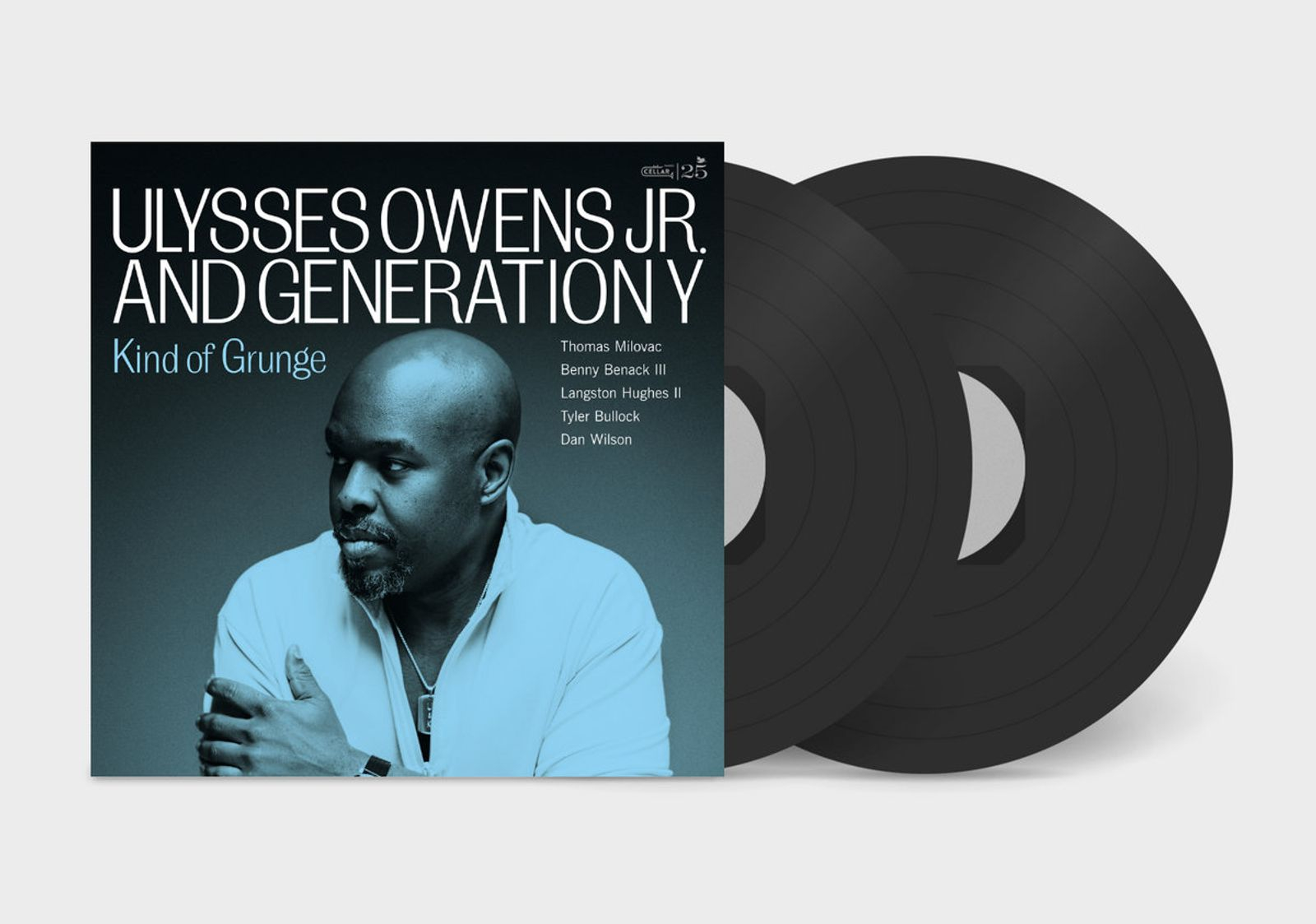
Ulysses Owens Jr. And Generation Y: Kind Of Grunge (2LP)
46,00 €
Formát:
LP
Dostupnosť:
na sklade / in stock
Katalógové číslo:
CMMV042726
EAN kód:
628308831784
Interpreti:
Benny Benack III, Dan Wilson, Langston Hughes II, Thomas Milovac, Tyler Bullock, Ulysses Owens Jr.
Vydavateľ:
Cellar Live
Zoznam skladieb
Dátum vydania: 30. 10. 2026LP 1
Side A:
1 Touch Me I'm Sick
2 Even Flow
3 Would?
Side B:
1 Disarm
2 Smells Like Teen Spirit
3 Wooden Jesus
LP 2
Side C:
1 Spoonman
2 Interstate Love Song
3 In Bloom
Side D:
1 Celebrity Skin
2 Heart-Shaped Box
3 Where Did You Sleep Last Night
Popis
The selection of songs—from Alice in Chains’ dissonant “Would?” to the Stone Temple Pilots’ jangling “Interstate Love Song” and the Smashing Pumpkins’ symphonic “Tonight, Tonight” by the Smashing Pumpkins—shows that the band is delving deep into its repertoire, thereby proving that grunge is just as elusive a genre as jazz. Conceptually, the album’s closing track, “Where Did You Sleep Last Night,” is the album’s clearest attempt to trace the connections between these two distinct musical styles. This 19th-century American folk song—the version recorded by blues musician Leadbelly in the 1940s—is best known today for Nirvana’s 1993 performance of the song on “MTV Unplugged.” While Cobain’s interpretation connected the Mississippi Delta with the Pacific Northwest, in the “Kind of Grunge” version, Wilson takes the helm and parks the band somewhere off Highway 61 with an electric blues rendition.
In his own interpretation of the blues, Miles Davis kept his horizons wide open. He willingly resisted the clichés that might have limited him—“My dad’s rich and my mom’s pretty,” he famously said in an interview, arguing, “I can play the blues.” His masterpiece wasn’t called “Very Blue” or simply “Blue.” It was called “Kind of Blue.” Kurt Cobain, for his part, never accepted the term “grunge,” which he considered nothing more than a commercial perversion. Neither artist allowed themselves to be confined by genres. Instead, they pushed against sonic boundaries and transcended them.